+86-173-0318-1768
- All
- Product Name
- Product Keyword
- Product Model
- Product Summary
- Product Description
- Multi Field Search

Views: 0 Author: Site Editor Publish Time: 2025-11-21 Origin: Site


Prolonging the service life of a mill liner can dramatically lower maintenance costs and reduce downtime. Yet, for plant operators, longevity alone is not enough—extended wear life must go hand in hand with consistent or even improved grinding performance. At Strudex, decades of experience in rubber and composite liner design have shown that the right balance between durability and throughput comes from a mix of material science, precise operation, and proactive maintenance. This article explores the most effective strategies to extend liner life without sacrificing mill efficiency, while also introducing how Strudex’s engineering and monitoring technologies make this possible.
Every liner faces the combined effects of impact, abrasion, corrosion, and fatigue. Each of these mechanisms affects performance differently and understanding them is the first step toward effective prevention.
Impact wear occurs when large ore particles or grinding media strike the liner surface repeatedly, causing micro-cracks and gradual material loss. This type of wear is most severe in the feed end of SAG and ball mills. Abrasion, on the other hand, results from the continuous sliding or rolling of fine particles against the liner. Over time, this smooths out the profile and reduces the lift of grinding media, lowering grinding efficiency.
In wet grinding circuits, corrosion accelerates the wear process, particularly in mills with poor drainage or in operations using aggressive chemical additives. Lastly, fatigue wear develops under cyclic loading as the liner expands and contracts during mill rotation, which eventually causes delamination or tearing—especially in steel liners.
By identifying which mechanism dominates in a specific mill, operators can tailor materials and maintenance plans to match real wear conditions. For instance, Strudex rubber liners are formulated with superior elasticity and cut resistance, making them particularly effective in combating both impact and abrasion while naturally resisting corrosion in moist environments.
Even the best liner material cannot perform well without proper maintenance. Preventive care ensures that the liner’s wear remains predictable and under control, reducing the risk of premature failure or performance loss.
One of the simplest yet most overlooked practices is regular inspection. Scheduled visual checks and thickness measurements help detect localized wear zones, missing bolts, or deformation early. Wear mapping—using handheld scanners or templates—provides valuable data to compare wear patterns between relines, revealing operational or design issues.
Maintaining correct bolt torque is also critical. Under-torqued bolts can loosen during operation, allowing liner movement that accelerates wear; over-torqued bolts may cause cracking. Using high-quality anti-seize lubricants ensures bolts can be removed cleanly during relines, saving time and preventing thread damage.
Cleaning and lubricating liner seats, checking sealing strips, and ensuring even bolt load distribution all contribute to extending liner life. Strudex’s technical service team often assists customers in developing customized reline procedures to maintain optimal safety and liner integrity throughout the entire service period.
Operational settings can dramatically influence both wear rate and throughput. Minor adjustments to mill speed, ball charge, or slurry density often have measurable impacts on liner performance.
Running a mill too fast increases impact forces, causing liner chipping or delamination, while operating too slow can reduce grinding efficiency and lead to coarse product size. The goal is to maintain an ideal rotational speed that provides sufficient cataracting action without excessive impact energy.
The ball charge and media size also affect wear. A high charge level improves throughput but raises liner contact frequency. In contrast, smaller media reduce impact intensity but may increase abrasion. Balancing these forces is key to optimizing both liner life and grind performance.
Slurry characteristics—such as pH, solids content, and viscosity—further influence wear behavior. A well-controlled slurry cushions the liners, while excessive density increases abrasive interactions.
Strudex engineers often collaborate with operators to analyze mill power draw and charge trajectories using advanced simulation tools. By combining field data with digital modeling, they recommend precise operational settings that minimize liner stress while maintaining or improving throughput.
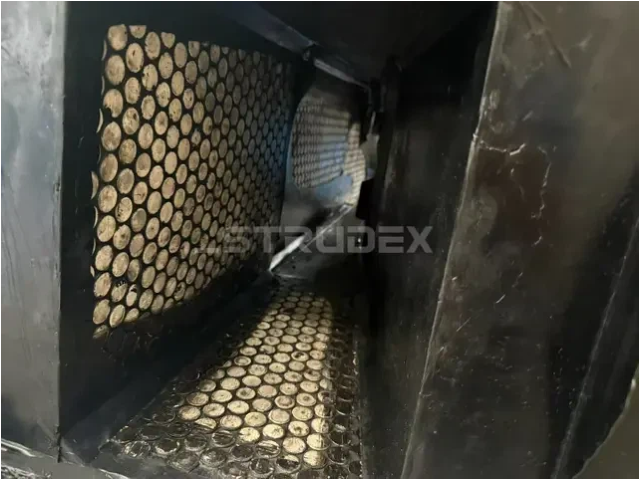
Material innovation lies at the heart of longer-lasting liners. Traditional steel liners offer high strength but are heavy and prone to impact cracking. In contrast, modern rubber and composite liners combine strength with resilience, offering superior wear resistance and reduced stress on mill components.
Advanced rubber compounds used in Strudex liners contain reinforced polymers and special curing agents that enhance elasticity and cut resistance. This allows them to absorb impact energy instead of fracturing, which extends liner life substantially while reducing noise in the mill.
Composite liners go a step further by merging steel backing plates with molded rubber or polyurethane faces. The steel provides structural integrity, while the rubber absorbs shock and abrasion. This hybrid approach delivers the durability of metal with the safety and handling advantages of rubber.
Design also plays a crucial role. Optimized liner profiles improve media lift and cascade trajectories, ensuring efficient grinding and uniform wear. Strudex employs precision CNC machining and 3D scanning to design liners that fit mill geometry perfectly, improving performance consistency and installation ease.
In many cases, switching from steel to Strudex’s composite systems not only extends liner life but also increases throughput, as smoother internal surfaces promote better media motion and prevent blinding.
The next evolution in liner management is digital. Predictive technologies now enable operators to monitor liner wear in real time, allowing for smarter maintenance scheduling.
IoT-based wear sensors can be embedded into liners to measure vibration, temperature, and strain. These sensors communicate with central control systems to provide continuous feedback on liner condition. When combined with mill load data and throughput metrics, predictive models can forecast when specific sections will reach critical wear limits.
This proactive approach minimizes unexpected shutdowns while ensuring that liners are not replaced too early—saving both time and money. For example, Strudex offers digital wear tracking tools and simulation-based wear models that help clients plan relines precisely and safely.
Predictive replacement strategies also improve mill utilization rates by aligning maintenance with production schedules. Instead of reacting to failure, operators can schedule liner changes at the most convenient intervals, maintaining optimal grind performance throughout the liner’s service life.
Strudex has built its reputation on creating mill liner solutions that deliver measurable life-cycle value. The company’s rubber and composite liners are engineered to provide lightweight strength, safer handling, and longer wear life—all while enhancing grinding efficiency.
Each liner system is designed using advanced simulation technology to model wear patterns and media motion under various mill conditions. This data-driven approach ensures every design maximizes energy transfer and minimizes dead zones within the mill.
Beyond product design, Strudex provides service agreements and technical support that help clients monitor wear and predict replacement timing. From installation assistance to post-operation wear audits, the company works closely with customers to achieve the lowest cost per tonne of ore processed.
As a result, operations using Strudex liners often report not just longer wear life, but also improved throughput and safer maintenance procedures—key advantages that set Strudex apart in the global mining supply chain.
Extending the service life of a mill liner without compromising throughput is entirely achievable when material innovation, operational discipline, and predictive monitoring come together. Strudex’s advanced rubber and composite liner systems embody this balance—offering durability, efficiency, and safety in one integrated solution. By implementing smart maintenance routines, optimizing operational parameters, and leveraging digital wear monitoring, operators can achieve more tonnes per liner and lower cost per tonne. To learn how Strudex can help your operation extend liner performance and reliability, contact us today.
Q1: What factors most commonly shorten mill liner life?
Impact, abrasion, and corrosion are the leading causes. Improper bolt torque, poor slurry control, and unbalanced mill loads can also accelerate wear.
Q2: Can switching from steel to rubber liners reduce downtime?
Yes. Rubber and composite liners from Strudex are significantly lighter and easier to handle, allowing faster, safer relines and shorter shutdowns.
Q3: How does liner profile affect grinding throughput?
An optimized liner profile improves media lift and cascading action, enhancing energy transfer to the ore and maintaining consistent grind size while reducing wear.
Q4: What tools can predict when liners need replacement?
Digital wear sensors and predictive modeling software—such as those offered by Strudex—help track liner condition in real time and plan relines efficiently.


