+86-173-0318-1768
- All
- Product Name
- Product Keyword
- Product Model
- Product Summary
- Product Description
- Multi Field Search

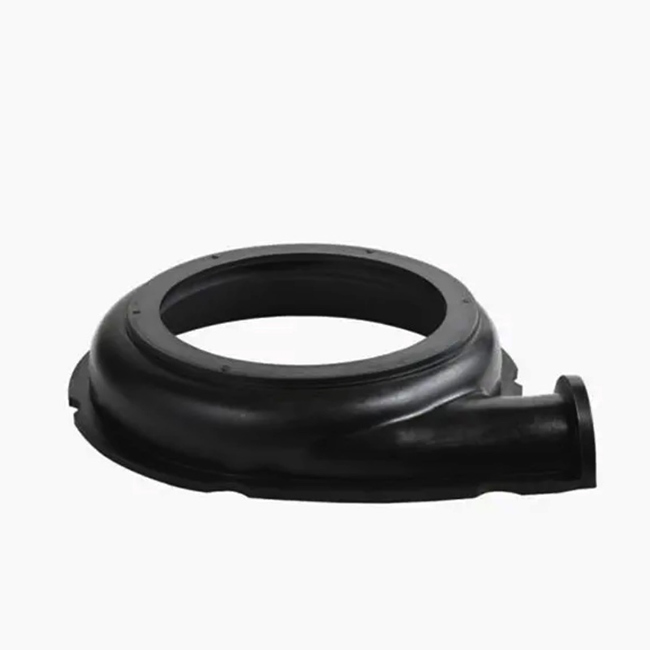 |


Strudex rubber slurry pump liners are offered for mining, dredging and industrial slurry handling. The range uses rubber compound configurations selected for the combination of abrasive solids and liquid exposure in each process. A mining tailings duty and a chemical-process slurry should have separate operating specifications.
For buyers managing pumps across several departments or sites, record each duty with its part reference and material specification. Shared dimensions do not establish that one rubber compound suits every application.
| Quantity: | |
|---|---|
Strudex industrial slurry pump liners provide replaceable rubber wear surfaces for different process services. The product family is configured around the solids, carrier liquid and pump geometry of each duty. Its cross-industry value comes from matching those conditions, rather than assuming that a rubber part which fits one pump is suitable for every process served by the same nominal size.
| Parameter | Product configuration |
|---|---|
| Component family | Replaceable rubber slurry-pump liners |
| Wear material | Duty-specific rubber compounds |
| Function | Renewable stationary wet-end wear surface |
| Geometry | Pump-model-specific liner configuration |
| Application families | Mining, dredging and industrial processing |
| Listed process slurries | Mineral, coal, ash and ceramic-process duties |
| Configuration basis | Selected liner drawing and material specification |
| Documented rubber-family boundary | Small particles without sharp edges |
The abrasive particles describe only part of the exposure. They reach the liner in a liquid that may contain process reagents, dissolved constituents or occasional contaminants. Temperature and contact time affect that combined duty. Selecting the rubber formulation means defining how the complete mixture meets the stationary surface, including production conditions and other liquids that contact it between campaigns.
| Duty family | What the liner encounters | What makes the configuration specific |
|---|---|---|
| Mineral and coal processing | Suspended solids in process water, potentially with reagent carryover. | The solids distribution and shape must be considered with the actual water and chemical composition, rather than assigning a material from the mineral name alone. |
| Sand and dredging service | Sand or silt with a potentially variable feed and occasional debris. | The maximum credible particles and sharp or foreign material matter alongside average size and concentration. Rubber is not an automatic choice for every dredged mixture. |
| Ash and ceramic-process slurries | Abrasive solids carried with process additives under the plant’s temperature conditions. | Settling, liquid composition and changes during flushing or cleaning belong to the same material review. |
| Chemically exposed industrial duty | A mixture whose liquid can influence the polymer as well as transport solids. | Chemical identity, concentration, temperature and duration must refer to the exact proposed compound and complete pump arrangement. |
A configurable compound family lets the material be chosen for a defined service. That is a more useful proposition than a single claim of acid, alkali or high-solids resistance. Two pumps can have identical liner geometry while exposing their rubber surfaces to different liquids and particles. Their mechanical parts list may look similar, but their material approvals can remain different.
The liner forms part of the wet-end passage and must mate with the casing and neighbouring components. Material suitability cannot compensate for the wrong profile, sealing arrangement or required clearance. Likewise, a part that fits dimensionally is not automatically chemically suitable. The complete selection therefore combines the liner drawing, exact material configuration and approved service description.
| Change at the plant | Why it matters to the liner |
|---|---|
| A new reagent or cleaning liquid | The liquid contacting the rubber may differ even when solids concentration and pump speed remain unchanged. Review the compound against that added exposure. |
| A coarser or sharper feed | The damage mechanism can move toward cutting or impact. An earlier fine-slurry history does not establish suitability for the new solids range. |
| A different flow, head or speed | The operating point and local circulation can change the mechanical exposure. A material change is not a substitute for checking the pump duty. |
| An apparently similar part issued from another department | Mechanical appearance does not establish the material identity or service approval. Keep the asset, drawing and compound references associated. |
These relationships explain the useful limit of multi-industry adaptability. The same product family can support several defined configurations without making every configuration interchangeable. For a purchaser managing several plants, the result should be a controlled set of application-specific liner specifications, not an unqualified common rubber stock code.
Provide one specification line for each pump service: asset and model, liner drawing, material configuration, quantity and normal operating duty. Add the credible solids and chemical excursions, with the reason for the previous removal. This gives the replacement a clear function and preserves the distinction between gradual abrasion, local damage and changed exposure, while avoiding unsupported universal pressure, temperature or chemical claims.


