+86-173-0318-1768
- All
- Product Name
- Product Keyword
- Product Model
- Product Summary
- Product Description
- Multi Field Search

Views: 0 Author: Site Editor Publish Time: 2026-06-24 Origin: Site


Poorly managed transfer points generate massive hidden costs. Premature belt wear, fugitive dust, structural damage, and unplanned downtime plague facilities everywhere. Standard rollers cannot safely absorb the kinetic energy of falling material in heavy-duty applications. They bend under extreme drops. Bearings shatter from repeated shock loads. Conveyor structures suffer critical damage over time. You need robust engineering to cushion the blow effectively.
This guide provides an engineering-focused framework. It helps you evaluate, specify, and install the correct equipment. We base this framework entirely on your facility's exact material weight and drop height. You will learn how to calculate accurate duty ratings. We explore frame evaluations, structural fit, and maintenance accessibility. Read on to transform your transfer points into efficient, clean, and reliable zones.
Specifying an impact bed requires calculating precise impact energy (drop height × lump weight) to match standard duty ratings (Light, Medium, Heavy).
Impact beds are not a universal replacement for impact idlers; hybrid systems often yield the best balance of shock absorption and belt tracking.
A robust belt protection system must integrate seamlessly with skirting and sealing systems to prevent material entrapment and dust generation.
Vendor evaluation should heavily weight maintenance accessibility, specifically slide-out bar designs that eliminate the need to lift the belt during replacements.
Load zones take brutal punishment every single day. Localized impact forces in bulk material handling cause severe damage. Jagged rocks strike the rubber at high velocities. This kinetic energy gouges the top cover easily. It ruptures the internal fabric carcass. Idler bearings inevitably fail under these repeated shock loads. You must look beyond standard components to stop this destructive cycle.
We define success by long-term operational reliability. Shift your focus away from merely buying a piece of hardware. You are investing in comprehensive loading zone support. True success means achieving zero belt puncture events. It means drastically reducing material spillage along the conveyor line. It also requires extending the overall operational life of the belt itself.
Upgrading your transfer points prevents recurring maintenance nightmares. You stop replacing bent idler frames constantly. You eliminate emergency belt splice repairs during production shifts. The upfront engineering saves massive amounts of physical maintenance labor. Your maintenance team stays out of hazardous chute environments. Facility output remains steady, predictable, and highly efficient over the long term.
Failure Mode | Root Cause | Preventative Strategy |
|---|---|---|
Cover Gouging | Sharp material striking an unsupported belt. | Install continuous surface support below the drop. |
Carcass Rupture | Heavy lumps crushing the belt against steel rollers. | Utilize energy-absorbing composite rubber layers. |
Bearing Failure | Kinetic shock loads exceeding roller bearing ratings. | Remove moving parts directly under the impact zone. |
Operators often debate the right equipment for transfer points. Impact idlers have clear structural limitations. Rubber-disc idlers only offer point-contact support. They work reasonably well for belt tracking. They suit low-impact zones perfectly. However, they allow significant belt sag between the individual rollers. Material escapes easily through these gaps. This creates dangerous and messy spillage issues around the tail section.
A well-designed conveyor impact bed provides continuous surface support. It entirely eliminates the destructive "trampoline effect". The belt remains perfectly flat under the loading chute. A flat profile ensures effective sealing against rubber skirting. It traps fugitive dust and loose material exactly where they belong.
We always recommend a pragmatic hybrid approach for optimal performance. You should not install continuous support along the entire length of a long transfer zone. Continuous sliding friction increases motor amp draw significantly. It creates excessive drag on the drive pulley. Instead, deploy a hybrid layout.
Install stationary beds directly under the primary material trajectory.
Transition immediately to impact idlers downstream of the main drop.
Use standard troughing idlers once the material settles and accelerates.
This systematic design balances shock absorption with efficient belt tracking. It protects the rubber without overloading the drive motor.
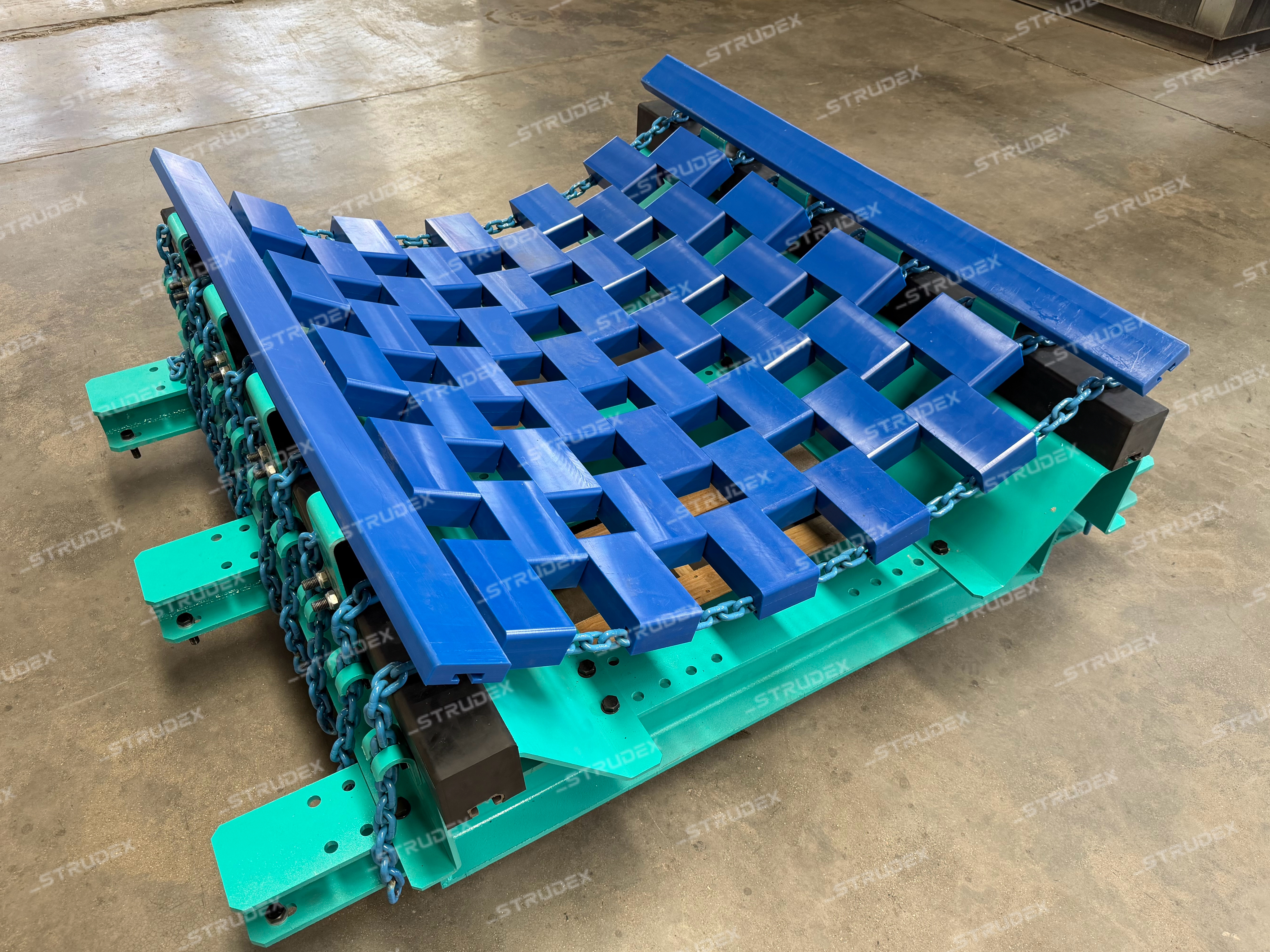
You cannot rely on guesswork when specifying load zone equipment. Hard engineering calculations must drive every decision. Use this structured four-point framework to evaluate and choose correctly.
Industry standards dictate the correct specification process. The Conveyor Equipment Manufacturers Association (CEMA) provides the core mathematical formula. You calculate Impact Energy in either lb-ft or Joules. You multiply the single largest lump weight by the total material drop height.
Do not rely on average material sizes. Always use the heaviest potential rock. Always measure from the highest possible drop point. We classify the resulting energy into three primary tiers to match standard equipment ratings.
Duty Rating Tier | Impact Energy Range | Typical Applications |
|---|---|---|
Light Duty | Up to 200 lb-ft | Sand, gravel, woodchips, light agriculture. |
Medium Duty | 200 to 1,000 lb-ft | Coal, limestone, medium-sized aggregates. |
Heavy Duty | Over 1,000 lb-ft | Hard rock mining, large ore lumps, primary crushers. |
An effective impact bar bed relies heavily on specialized composite materials. High-quality designs feature three distinct operational layers. Each layer serves a specific engineering purpose.
Top Layer: Manufacturers use UHMW (Ultra-High Molecular Weight) polyethylene. It provides ultra-low friction for the moving belt. It prevents heat buildup and resists severe abrasion.
Middle Layer: An energy-absorbing rubber matrix dissipates the kinetic force. Manufacturers vulcanize this rubber to specific durometers to maximize compression and rebound.
Core Layer: An extruded aluminum or steel fastening core ensures structural integrity. It prevents the bar from warping under pressure. It also anchors the fastening bolts securely.
These three layers work flawlessly together. They absorb massive shocks while allowing the belt to glide smoothly over the surface.
Your new equipment must match the existing conveyor structure perfectly. Manufacturers typically offer standard wing angles of 20, 35, or 45 degrees. You must verify this angle before ordering.
Mismatched angles cause severe transition stress. The rubber belt will cup awkwardly. Material will spill aggressively over the edges. It will also cause premature wear on the internal fabric plies. Always measure the existing idlers physically. A seamless structural transition prevents internal carcass damage entirely.
Bar composition means nothing without a strong structural foundation. Heavy-duty steel frameworks are absolutely critical. A frame that flexes under load defeats the entire purpose.
When a frame bends, the kinetic energy transfers directly into the belt. It bypasses the shock-absorbing rubber entirely. Look for heavily reinforced steel gussets. Solid welding ensures the frame withstands decades of abuse. The frame must transfer the downward force into the main conveyor stringers safely.
Your new equipment does not operate in isolation. It must integrate flawlessly with existing dust control measures. Continuous support delivers a massive sealing advantage. It removes belt sag completely.
Sag is the primary root cause of skirting failure. When the belt sags between rollers, fugitive dust escapes instantly. A perfectly flat surface keeps the rubber skirting tight against the belt profile. It seals the transfer point effectively.
Entrapment prevention requires precise mechanical engineering. You must control the exact gap between the support bars and the steel skirting. Rocks can easily jam in small crevices. A trapped rock acts like a fixed knife blade. It can slice a moving belt longitudinally in seconds. You must position the skirtboards accurately over the continuous support zones.
Designers often utilize distinct support zones to optimize performance. Some designs feature low-friction bars strictly on the outer wings. They place heavy-duty impact rollers in the center gap. Center rollers reduce the overall sliding friction. The solid wing bars maintain a tight seal for the skirting. This balances energy efficiency and environmental cleanliness perfectly.
Facility retrofits often face unexpected physical constraints. You must plan for installation realities carefully. Installation clearances trip up many engineering teams. Do not underestimate the vertical space required.
Retrofitting into an existing transfer chute demands highly precise measurements. You may need to modify the structural chute walls. You might need to adjust the skirtboard height. Always verify physical clearance dimensions before signing off on equipment drawings.
You must acknowledge maintenance realities upfront. Even the best UHMW bars will eventually wear out. Constant sliding friction and repeated impacts take their toll over time. Maintenance avoidance is practically impossible. Maintenance ease, however, is highly achievable.
You should heavily evaluate slide-out replacement mechanisms. Track-mounted, modular designs save massive amounts of time. Maintenance teams can easily slide bars out from the side of the conveyor. They avoid several hazardous and time-consuming steps.
They do not need to hoist the heavy tensioned belt.
They do not need to cut or remove structural chute walls.
They can replace individual bars independently as they wear.
They require minimal specialized tools for routine change-outs.
Prioritizing accessibility keeps your maintenance crew safe. It drastically reduces the hours required for standard overhauls.
Your evaluation flow must follow a logical, step-by-step sequence. Start with precise impact energy calculations based on real material data. Verify the structural fit, troughing angles, and physical installation clearances. Finally, prioritize maintenance-friendly designs to ensure long-term operational success.
Stop relying on theoretical design specs or outdated facility drawings. Actionable, real-world data drives better engineering decisions. Request a comprehensive site audit from your trusted vendors. Have them physically measure actual drop heights. Let them weigh the exact lump sizes moving through your process.
Choosing the correct impact bed eliminates daily operational headaches. It traps fugitive dust, stops material spillage, and simplifies routine maintenance. Above all, it actively protects your most expensive facility asset: the conveyor belt itself.
A: No. Excessive use of continuous sliding surfaces increases belt drag and motor strain significantly. They should only be used directly under the primary material trajectory. You should transition back to standard troughing idlers immediately downstream.
A: Lifespan depends entirely on operational tonnage, material abrasiveness, and correct duty-rating specification. Top-tier UHMW bars operating in a properly specified environment generally last anywhere from 1 to 3 years before requiring replacement.
A: While standard CEMA lengths (usually 4ft or 5ft) and standard belt widths exist, installation requires customization. The frame mounting brackets, vertical clearances, and trough angles often require site-specific adjustments to fit existing stringers perfectly.


