+86-173-0318-1768
- All
- Product Name
- Product Keyword
- Product Model
- Product Summary
- Product Description
- Multi Field Search

 |


| Quantity: | |
|---|---|
In the harsh world of mineral processing, mill liners are the first line of defense against abrasion, impact, and corrosion. But traditional liners—whether all-steel or pure rubber—come with trade-offs: steel is heavy and slow to install; rubber wears faster in high-impact zones. What if you could combine the best of both?
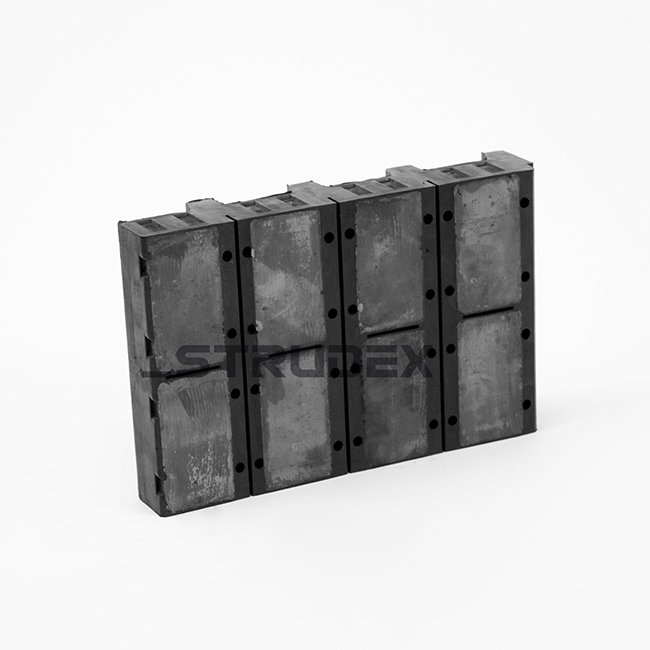
Strudex Rubber Magnetic Liners do exactly that. By embedding high-intensity permanent magnets into a wear-resistant rubber compound, we have created a liner that attaches magnetically to the mill shell, eliminates most mechanical fasteners, and provides superior protection for ball mills, SAG mills, and vertical mills. The result? Shorter installation time, longer liner life, and a cleaner, safer grinding environment.
Traditional liner systems rely on rows of bolts—dozens or even hundreds per mill. Bolts loosen, leak slurry, require frequent retorquing, and create failure points. Strudex Rubber Magnetic Liners change the game:
- No bolt holes in the mill shell – No slurry leakage, no shell corrosion.
- Magnetic attachment – Liners snap into place instantly, reducing reline time by up to 60%.
- Rubber cushioning – Absorbs impact, reduces noise, and protects the mill structure.
- Built-in magnetic retention – Even if a liner cracks, magnets hold it in place until scheduled maintenance.
These liners are ideal for mines seeking to reduce downtime, improve safety, and lower total cost of ownership.
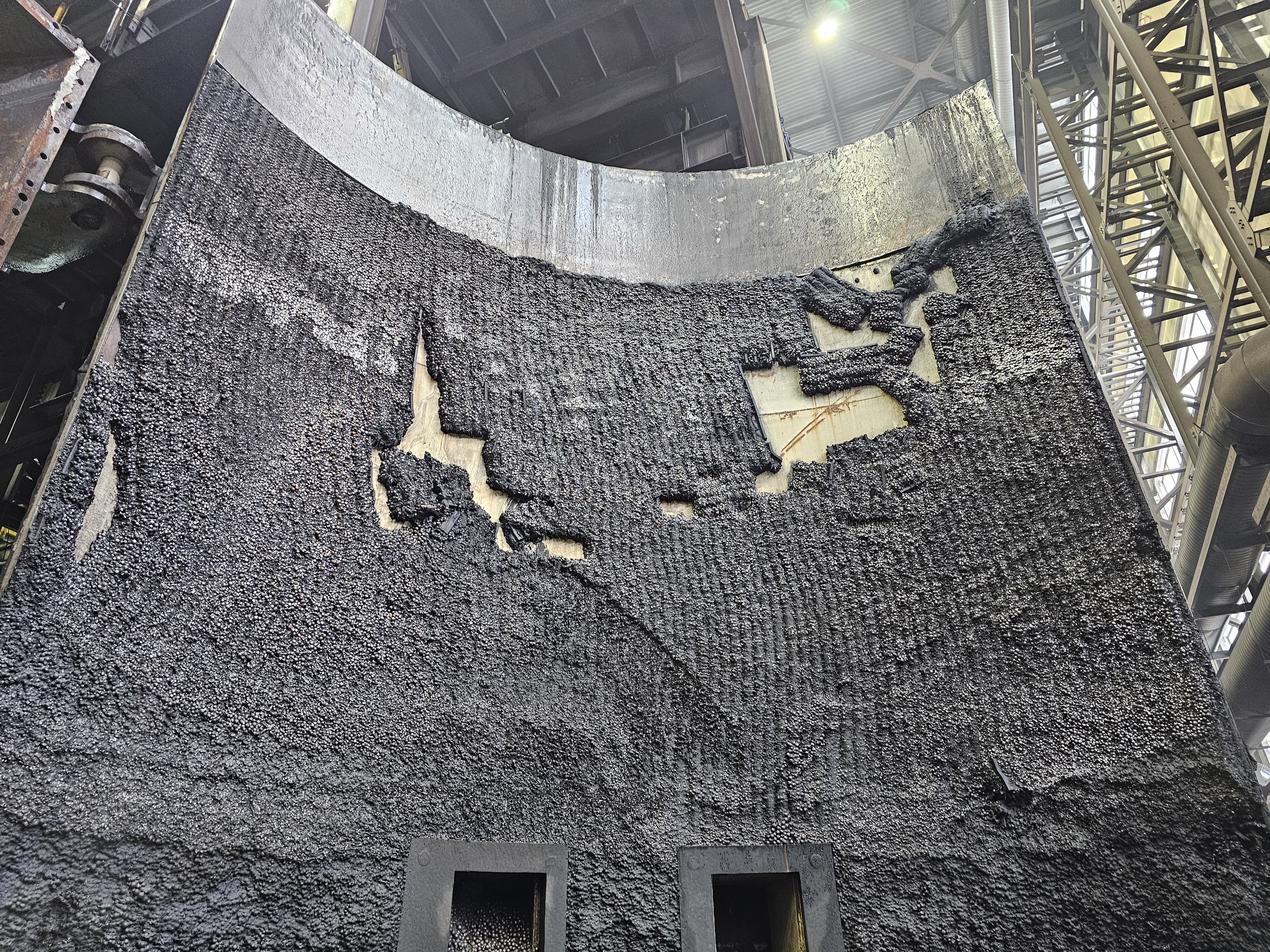
Each liner contains a carefully arranged array of rare-earth or ferrite magnets, fully encapsulated within the rubber compound. The magnetic field is optimized to provide:
- Uniform holding force across the entire liner surface.
- Resistance to demagnetization from impact and temperature (operating range: -40°C to +120°C).
- No power supply needed – Permanent magnets never fail during operation.
The rubber matrix is not ordinary. Strudex uses a proprietary wear-resistant rubber compound with:
- Exceptional tear strength and abrasion resistance (DIN abrasion ≤ 90 mm³).
- High resilience to repeated impact from grinding media.
- Resistance to slurry chemicals, oils, and mild acids.
Instead of bolts passing through the mill shell, Strudex magnetic liners attach directly to the ferromagnetic shell (or to magnetic backing plates on non-magnetic shells). The magnetic attraction ensures:
- A secure, snug fit with zero movement during operation.
- No bolt holes means no leakage paths for slurry.
- Simple removal using a pry bar or lifting magnet during reline.
The primary role of any mill liner is to protect the mill shell from abrasive slurry and impacting media. Strudex magnetic liners excel at this:
- Impact absorption – Rubber compresses under ball strikes, dissipating energy rather than transferring it to the shell.
- Abrasion resistance – The high-grade rubber surface wears slowly and evenly, maintaining lifter profile.
- Corrosion protection – Rubber seals the shell completely; no exposed bolt holes mean no rust initiation points.
Because magnetic liners eliminate bolt holes, there are no stress concentration points where cracks typically start. Combined with our advanced rubber compound, Strudex magnetic liners deliver:
- 30–50% longer wear life compared to conventional rubber liners in the same application.
- Reduced risk of catastrophic liner failure – Magnets hold broken pieces in place.
- Consistent grinding performance throughout the wear cycle.
This is where magnetic liners truly shine.
Installation process:
1. Clean the mill shell surface.
2. Position the first liner – it snaps onto the shell magnetically.
3. Place adjacent liners – magnetic fields self-align edges.
4. No torquing, no bolt tightening, no sealant.
Reline process:
- Use a simple pry bar or magnetic lifter to remove worn liners.
- Average reline time reduced from 24–36 hours to 8–12 hours for a large ball mill.
Maintenance benefits:
- No regular bolt retorquing required.
- Visual inspection is easy – magnetic hold remains even if rubber wears thin.
- Minimal spare parts inventory – no bolts, washers, or rubber seals to stock.
- No slurry leakage – Eliminates floor contamination and reduces cleanup costs.
- Lower noise levels – Rubber construction reduces mill noise by 10–15 dB compared to steel liners.
- Safer reline work – Fewer workers needed inside the mill; no heavy bolt tensioning tools.
- Gold and copper mines – Ball mill secondary grinding.
- Iron ore beneficiation – Magnetite and hematite milling (magnetic liners add extra metal recovery benefit).
- Lead-zinc and polymetallic operations – Where slurry leakage is a major environmental concern.
- Cement and industrial minerals – Raw mills and finish mills.
- Ball mills (primary and secondary)
- Regrind mills
- Vertical stirred mills (e.g., Vertimill, SMD)
- SAG mills (in combination with rubber or composite lifters)
- Mines with frequent liner changes (high wear applications)
- Remote sites where maintenance labor is expensive
- Operations with strict environmental limits on slurry spills
- Plants moving toward predictive maintenance and reduced downtime


