+86-173-0318-1768
Wear Resistant Rubber Liners for Grinding Mills Lightweight Easy Assembly
You are here: Home » Products » Rubber Liners » Mill Liner » Wear Resistant Rubber Liners for Grinding Mills Lightweight Easy Assembly

Product Category

Contact Us

WhatsApp: +86-173-0318-1768
Tel: +86-173-0318-1768
E-mail: 
Add: Wencheng Industrial Zone, Jing County, Hengshui City, Hebei Province
 

loading

Share to:
facebook sharing button
twitter sharing button
line sharing button
wechat sharing button
linkedin sharing button
pinterest sharing button
whatsapp sharing button
kakao sharing button
sharethis sharing button

Wear Resistant Rubber Liners for Grinding Mills Lightweight Easy Assembly

5 0 Reviews

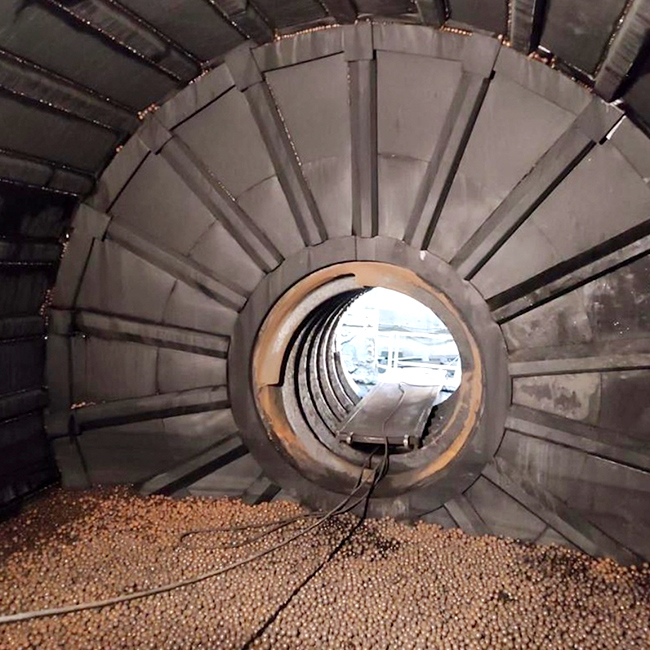
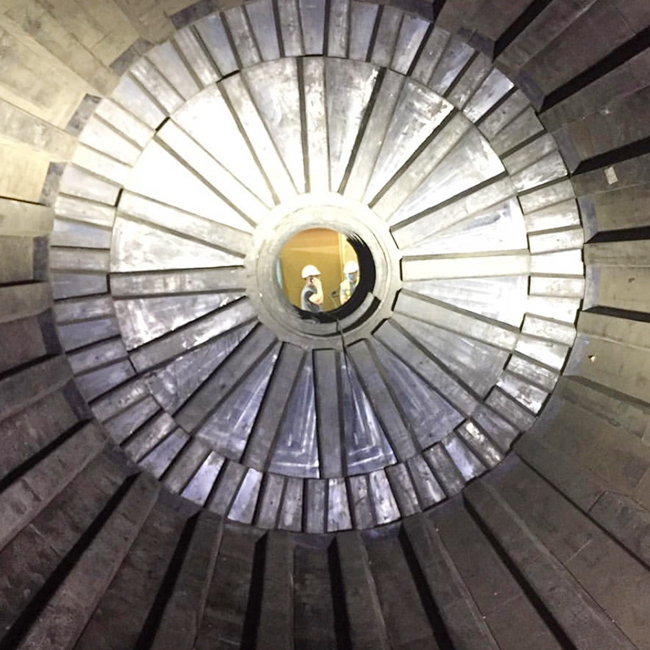
Strudex rubber grinding mill liners separate the mill structure from repeated ore and media contact. The rubber wear surface also damps contact noise. Their selection needs to connect the installed working profile with a component that can be supported, positioned and secured through the mill’s actual access route.

  • Rubber wear surface inside grinding mills.
  • Profile and section evaluated with the grinding duty.
  • Relining planned around the complete new part and its attachment.

A lower-density material can ease handling compared with a similar all-metal section, but the real component envelope and weight determine the site method.

Availability:
Quantity:

Strudex rubber grinding mill liners provide a resilient wear barrier between the mill load and the protected internal structure. Their practical value depends on the installed section: the wear face must suit the contact duty, the back must sit on the intended support, and the complete part must be compatible with the attachment and access. Relining convenience starts with that physical component, rather than a generic lightweight claim.

Technical Parameters

ParameterProduct specification
Product typeGrinding mill liner
Lining materialWear-resistant rubber
Equipment applicationGrinding mills
Working locationInternal mill wear surfaces
Protection functionWear barrier between the mill load and structure
Acoustic characteristicRubber damping of material-contact noise
Maintenance formatReplaceable lining components

The installed section has a working face and a support face

Part of the sectionWhat it does in the millWhat to establish for a replacement
Rubber working faceReceives repeated contact from ore, media and, where present, slurry. Its shape forms part of the internal lining surface.Required new thickness and profile, together with the type of abrasion, impact or cutting observed in service.
Back and seating surfacePlaces the component against its intended support. Gaps or uneven seating change the local condition beneath the rubber.Shell curvature, mating geometry and the state of the exposed support, rather than an assumption that flexibility will absorb every discrepancy.
Edges and neighboring sectionsForm the junctions of the installed lining. A raised or unsupported boundary can become a local wear point.Relationship to retained parts, orientation and the transition between new and worn sections.
Attachment regionLocates and retains the liner according to its selected design.Actual fastening interfaces, seat details and any sealing items. The rubber material name does not specify a universal fixing system.

A worn sample shows how the previous component changed, not necessarily the shape that should be manufactured again. Its reduced section, rounded edge or distorted attachment should be distinguished from original geometry. Use the installed arrangement and the intended new dimensions to establish the working contour, while using the sample to understand the contact pattern and mounting relationship.

Relate the rubber to the contact duty

  • Gradual sliding wear reduces the available section over a broad area. Compare the critical remaining thickness with the original new profile and the role of that section in the lining. A flat average reading can conceal an exposed local region.
  • Deep cuts or tears describe a different failure mechanism. Identify particle sharpness, credible oversize and any foreign objects, and inspect edge support. Increasing thickness may add material but does not by itself explain why cutting concentrates at a particular location.
  • Where the liner participates in a lifter-and-plate arrangement, compare the parts together. Changing plate thickness changes the relative lifting contour, while retaining a worn neighboring part can leave an abrupt transition. A replacement must fit mechanically and preserve the intended internal relationship.
  • Temperature, process liquids and chemical contact affect compound selection independently of component outline. State the actual low and high operating temperatures and credible excursions for material review. A general rubber-liner description is not a temperature rating.

Translate lower material density into a real handling decision

Rubber has lower density than steel, but the complete manufactured section can include different shapes and supporting elements. Compare actual part mass and dimensions rather than estimating them only from material. A large rubber component may still require lifting equipment, and a part that fits inside the mill may not pass through the available opening in the required orientation.

  1. Define the full new-component envelope, including its attachment or support features. Compare that envelope with the access opening, the route through the mill and the space needed to rotate the part into position. A dimension taken only across the rubber wear face may miss a limiting feature.
  2. Relate the section size to the available handling method. Confirm the actual weight, center of gravity where relevant and the permitted way of supporting the part. A proposed split into smaller components also changes joints and attachment locations, so it needs an arrangement review rather than an assumption that any division is acceptable.
  3. Identify the removal relationship with neighboring liners. One section can be physically separate yet held by, covered by or inaccessible behind another component. The selected sequence should follow the assembly geometry, preserving support and clearance as the work proceeds.
  4. Verify seating and attachment after positioning. An access-friendly shape still needs to form the intended working surface. Resolve a damaged shell seat or a mismatched fastening detail before accepting the installed part; forcing flexible rubber into place does not confirm fit.

Keep three replacement endpoints separate

EndpointMeaning for the next specification
Wear protection is locally exhaustedReview the section and contact duty at that position before the underlying structure is exposed.
The working profile is no longer appropriateEvaluate the relation to lifting elements and the process requirement, even if some rubber remains.
Attachment or seating damage governs removalAddress the affected interface and support. It is a different job from adding more wear material to a sound face.

Rubber can dampen the ringing associated with direct material contact against metal. That characteristic does not establish a particular workplace noise limit or an energy saving. Assess grinding output and handling separately: a convenient reline should still deliver a suitable working contour, while a suitable contour should be provided in components the site can install correctly.

For a Strudex replacement enquiry, combine the mill lining arrangement with the actual new-part envelope, mounting interfaces and the observed wear mechanism. This defines a practical rubber liner requirement without assuming a specific OEM fit, a fixed component weight or a universal low-temperature capability.

Product FAQ

Can all rubber mill liners be lifted manually?
No. Rubber has lower density than comparable metal sections, but complete part mass, dimensions and access still determine the handling method. Obtain the proposed component information and review it against the site lifting procedure. A lightweight material description is not a manual-lifting approval.
What should we specify when the mill access opening is restricted?
Provide the opening dimensions, route to the installation position and available handling equipment. Check the envelope of the complete new component, including attachment features. The panel must be positioned and removed through that route, so overall fit inside the mill is only one requirement.
How should we compare reline time with the previous liner set?
Measure the full work sequence, including preparation, removal, support repairs, positioning, fastening and verification. Keep the replacement scope and crew conditions comparable. Timing only the installation of a new section can conceal delays caused by worn hardware, access restrictions or missing companion items.
Which spare-part checks should be completed before the mill stops?
Reconcile the parts with the current lining schedule and drawing revision. Check quantities by position, visible condition and the required fastening or sealing scope. Resolve unidentified components before staging them at the mill, especially where similar-looking sections from different layouts are held in stock.
Previous: 
Next: 
+86-173-0318-1768
Wencheng Industrial Zone, Jing County, Hengshui City, Hebei Province
Manufacturer of mill liners, rubber screen panels, flotation equipment accessories and other mineral processing wear-resistant spare parts.

Quick Links

Product Category

Contact Us
Copyright © 2024 Strudex Tech Co., Ltd. All Rights Reserved. Sitemap. Support by leadong.com. Privacy Policy.