+86-173-0318-1768
- All
- Product Name
- Product Keyword
- Product Model
- Product Summary
- Product Description
- Multi Field Search

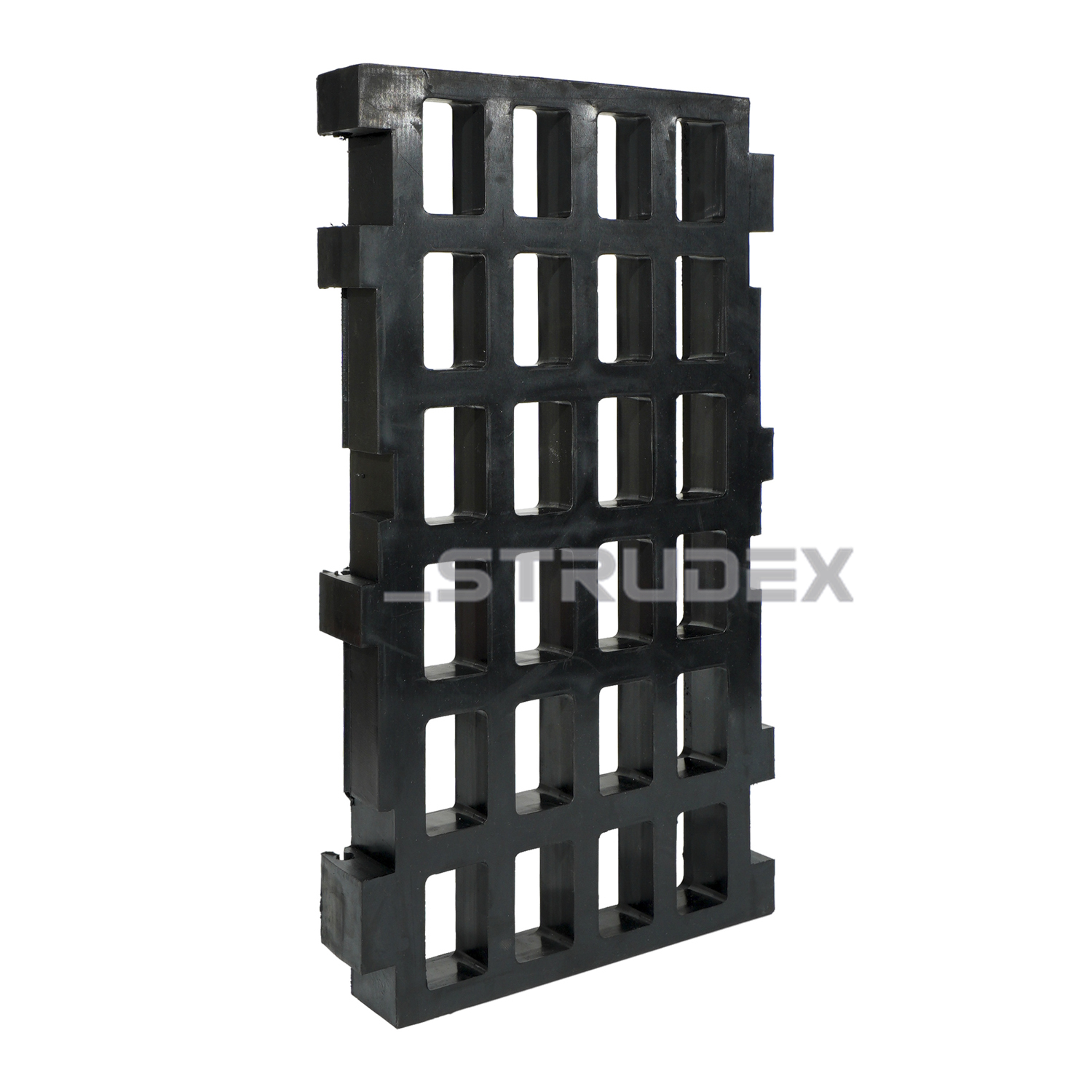 |


Strudex anti-blocking rubber sieve panels combine a resilient screening surface with snap-in attachment for mineral processing and aggregate duties. They are designed for wet or dry operation where lodged particles, surface buildup and repeated media changes interrupt the screening cycle. Flexible rubber helps openings release near-size material, while the modular arrangement allows worn panels to be addressed individually. Available thicknesses span 8–25 mm, with panel geometry selected around the separation duty and deck connection.
| Quantity: | |
|---|---|
A blocked screen opening removes useful separation area even when the rest of the deck appears intact. Strudex anti-blocking rubber sieve panels address this practical problem with a flexible rubber screening surface and a snap-in mounting arrangement. They are intended for mineral and aggregate screening in wet or dry circuits, including matched stationary and mobile screen decks.
| Parameter | Specification |
|---|---|
| Screening medium | Resilient wear-resistant rubber |
| Panel construction | Modular rubber sieve panel |
| Mounting method | Snap-in / quick-lock connection |
| Panel thickness | 8–25 mm; customizable |
| Operating temperature range | −20°C to +70°C; select the grade for the actual duty |
| Screening conditions | Wet and dry |
| Application | Mineral processing and aggregate screening |
| Plant arrangement | Stationary and mobile screens with a matched mounting interface |
Rubber flexes as the screen vibrates and material moves across the surface. This movement can help release near-size particles that would otherwise remain wedged in an opening. It also cushions contact with the feed. The result sought is a deck that continues to expose undersize particles to working apertures, rather than allowing blocked areas to turn into a conveying surface.
| What is happening | What to examine before changing the panel |
|---|---|
| Particles wedged in individual openings | Remove a representative sample during an isolated inspection. Hard particles locked in otherwise clean holes point towards pegging. Compare their dimensions and shape with the opening, including the proportion of feed close to the target separation. Enlarging the aperture may release some particles but also changes which material enters the undersize stream; verify that change against the required product grading. |
| Fine material coats the surface | A continuous coating across webs and openings points towards blinding. Examine clay, moisture and washing coverage rather than judging the panel only by its nominal hole size. Record whether the problem develops with a particular stockpile or after rain. The appropriate opening pattern and rubber flexibility should address that mechanism while preserving the required separation. |
Look at particle shape as well as nominal size. Flat or elongated pieces can present a narrow dimension to an opening and then lodge or pass in a different orientation. A change in opening shape or orientation can affect both capacity and the amount of such material passing through. Define the acceptable product before optimizing the opening layout, and keep its narrow dimension, long dimension and direction clearly identified on the panel drawing.
The snap-in format is useful where maintenance access is restricted or where individual modules wear faster than surrounding panels. Its connection must engage fully along the intended fixing points. An audible click alone is not an installation inspection: the panel should sit at the correct level, remain secure at its edges and leave no unintended paths for oversize bypass.
Use cleaning tools that clear lodged material without cutting the rubber. Repeated loading on one strip of the deck should prompt a feed-distribution check, because a replacement panel alone does not correct uneven loading. Compare panel condition with product sizing results when deciding when to replace a module.
Establish a baseline for blocked openings, undersize quality and oversize carryover before changing the media. Where practicable, compare samples taken under similar feed rate, moisture and screen settings after installation. A visually clearer surface is useful evidence, but it should agree with the material reporting to each product stream. Also inspect the panel edges: material bypassing a joint is a different mechanism from particles passing through the intended aperture.
Send Strudex the panel and rail drawing, required openings, thickness, feed size distribution, wet or dry duty and minimum operating temperature. Photographs of the current blockage and worn panel will help define a suitable replacement configuration.


