+86-173-0318-1768
- All
- Product Name
- Product Keyword
- Product Model
- Product Summary
- Product Description
- Multi Field Search

Views: 0 Author: Site Editor Publish Time: 2025-12-05 Origin: Site


Why do some mills lose efficiency so fast? The answer often points to Ball mill liners, the quiet parts that shape every grinding action. These liners do more than protect the shell. They guide ball movement, control energy use, and keep product size stable.
This article explains why liner types matter. You will learn how material, shape, and function change mill performance. In the following sections, we will explore the key liner categories and help you choose the right one for your plant.
Understanding liner classifications improves grinding control. Ball mill liners differ in material composition, shape, function, and installation positions. Knowing these categories helps operators evaluate options more accurately for various grinding conditions and ore types.
Liner materials greatly influence durability and energy performance. High manganese steel delivers excellent impact tolerance, while high-chrome cast iron excels in abrasion resistance. Rubber and composite liners reduce weight and noise while improving ease of installation.
Different liner shapes create different grinding actions. Wave, step, flat, wedge, and classifying liners guide ball movement in unique ways. These differences directly influence mill power draw, product fineness, and liner wear rate.
Applications vary across grinding stages. Coarse grinding requires high-lift profiles for heavy impact, while fine grinding needs smoother profiles to support uniform abrasion. Correct matching significantly extends the lifespan of both liners and grinding media.
A strategic liner selection lowers total cost of ownership. When operators balance ore hardness, mill speed, liner profile, and maintenance capability, they achieve higher throughput, lower downtime, and improved overall mill productivity.
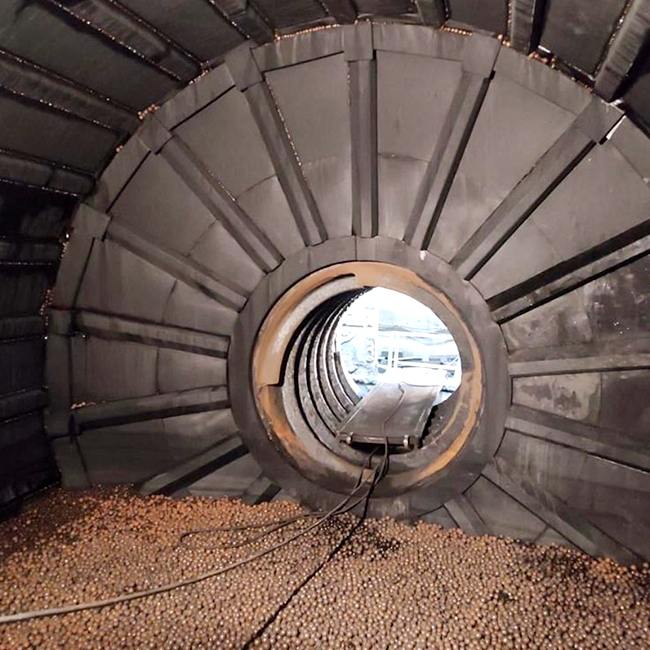
Ball mill liners can be evaluated using several classification frameworks, which help operators match the correct liner to specific operating conditions. These classifications cover material type, geometric profile, grinding stage, installation position, fastening method, and intended function. Understanding these categories ensures a more systematic approach to liner design and replacement planning, reducing downtime while improving performance.
Liner materials range from metallic alloys to elastomers and ceramics. Each material behaves differently under impact, abrasion, temperature, and chemical exposure. Selecting a material requires evaluating ore hardness, mill speed, expected wear mode, and environmental factors such as corrosion or moisture.
The shape of a mill liner determines how grinding balls move inside the chamber. Profiles such as wave, flat, step, and corrugated create unique lifting and cascading patterns. These patterns influence impact energy, grinding efficiency, and product particle size distribution.
Different grinding stages require different liner behaviors. Coarse grinding demands strong impact resistance and aggressive lifting. Intermediate stages require a mix of impact and attrition. Fine grinding depends on smooth profiles that encourage sliding rather than impact.
Liners installed at the mill ends face different stresses than those on the barrel. End liners withstand axial material flow and direct impact. Barrel liners experience continuous sliding and cascading from the grinding media. Each position requires a specific design and material.
Bolted liners use mechanical fasteners, offering secure attachment but requiring more maintenance. Boltless systems reduce installation time and eliminate potential leakage paths. The choice affects safety, installation speed, and long-term reliability.
Some liners focus primarily on shell protection, while others enhance grinding efficiency by guiding ball movement or segregating media. Functional liners improve energy usage, grinding uniformity, and throughput.
Understanding these categories allows engineers to create a tailored liner configuration. It also supports data-driven decisions when upgrading liner materials or shapes to solve production issues.
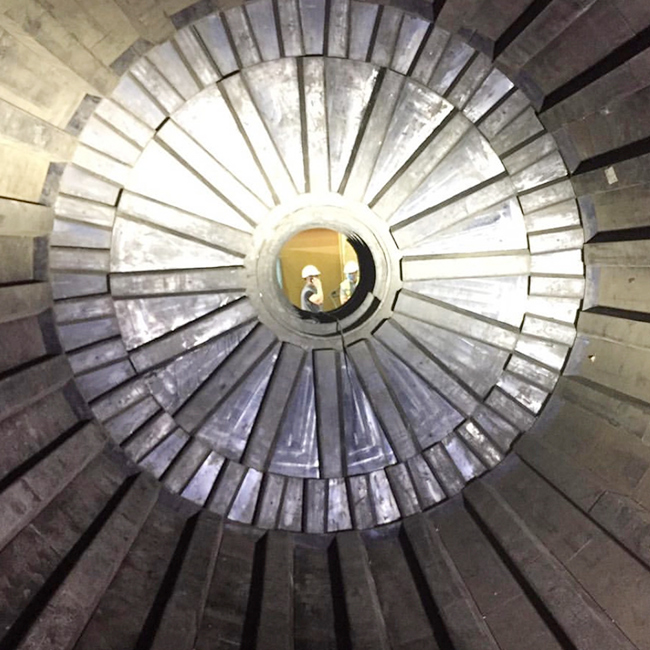
High manganese steel liners are widely used in coarse grinding due to their excellent impact absorption. They harden under repeated impact, improving wear resistance over time. However, they may deform when exposed to continuous heavy abrasion.
High-chrome liners offer exceptional abrasion resistance, making them ideal for fine grinding. They maintain shape under sliding wear but require careful installation to avoid crack initiation due to brittleness.
Alloy steel liners combine toughness, structural stability, and moderate abrasion resistance. They perform well in mills that experience mixed wear conditions. Their balanced properties give them a long service life compared to manganese steels.
Rubber liners reduce mill noise, vibration, and installation difficulty. Their light weight lowers mill load and improves motor efficiency. They perform best in wet grinding and low-impact environments.
Composite liners use metal inserts for wear resistance and rubber backing for impact absorption. They extend liner life, lower noise, and improve mill availability by reducing installation time.
Ceramic liners provide unmatched abrasion resistance, especially useful in ultra-fine grinding or chemical environments. They are unsuitable for high-impact conditions due to brittleness.
| Material Type | Strengths | Limitations | Ideal Application |
|---|---|---|---|
| High Manganese Steel | High impact tolerance | Moderate abrasion resistance | Coarse grinding |
| High-Chrome Cast Iron | Superior abrasion resistance | Brittle under heavy impact | Fine grinding |
| Alloy Steel | Balanced strength & durability | Higher cost | Mixed grinding |
| Rubber | Low noise & lightweight | Poor high-impact resistance | Wet grinding |
| Composite | Long service life, reduced noise | Higher initial cost | Large mills |
| Ceramic | Extreme abrasion resistance | Brittle | Ultra-fine grinding |
| Liner Type | Description | Key Grinding Behavior |
|---|---|---|
| Flat Liners | Promote sliding instead of lifting. Reduce impact energy and stabilize fine grinding. | Sliding, fine particle control |
| Wave Liners | Lift media higher for strong impact. Improve coarse breakage and raise first-chamber throughput. | High lift, heavy impact |
| Step Liners | Combine lifting and sliding for balanced impact and abrasion. Adapt to variable feed sizes. | Hybrid action |
| Wedge & Corrugated Liners | Aggressive profiles that increase agitation and provide strong lifting for coarse grinding. | Aggressive lift, strong impact |
| Classifying Liners | Separate media by size along mill axis. Large balls stay at feed end, smaller at discharge. | Automatic media classification |
| K-Shape & B-Shape Rubber Liners | Rubber designs that improve wear distribution, reduce noise, and support wet grinding. | Noise control, wet-grinding efficiency |
| Liner Shape | Ball Movement | Grinding Action | Typical Stage |
|---|---|---|---|
| Flat | Sliding | Abrasion | Fine grinding |
| Wave | High lift | Strong impact | Coarse grinding |
| Step | Mixed lift | Hybrid action | Mid-stage grinding |
| Corrugated | Aggressive lift | High agitation | First chamber |
| Classifying | Segregated | Optimized ball distribution | Multi-bin milling |
Coarse grinding requires high lift, strong impact, and durable metallic liners. Wave and corrugated designs create enough impact to break large particles efficiently.
Hybrid designs such as step liners provide balanced impact and abrasion. They offer stable performance as feed particle size transitions from coarse to fine.
Fine grinding needs smooth profiles such as flat or small-wave liners. These designs reduce excessive impact and enhance sliding, producing uniform product fineness.
Two-bin mills commonly use wave liners in the first chamber and flat liners in the second. Three-bin mills may add classifying liners in the middle for improved media distribution.
Protective liners shield the mill shell from continuous impact and abrasive contact generated by grinding media and raw materials. By absorbing this stress, they extend equipment lifespan, reduce structural fatigue, and significantly lower long-term replacement costs for operators.
These liners improve grinding efficiency by shaping ball trajectory and controlling how grinding media move inside the mill. Their optimized profiles help transfer more energy to the ore, increasing breakage efficiency while lowering unnecessary power consumption during operation.
Grading liners maintain ideal media size distribution by guiding large and small balls into the correct zones along the mill length. This improves grinding consistency, enhances particle reduction, and ensures each section of the mill operates at peak performance.
These designs control material movement by reducing dead zones and ensuring even distribution throughout the mill. They stabilize internal airflow and ventilation, helping maintain steady temperatures and a consistent grinding environment that supports higher throughput.
End liners handle heavy axial impact from incoming material, while barrel liners absorb continuous cascading wear from grinding media. Because stress patterns differ greatly, each location requires its own geometry, thickness, and liner material to ensure long-term reliability.
These components work together to form the complete mill liner assembly. Lifter bars control how high grinding media are lifted before impact, while shell plates protect the mill body from abrasion, ensuring structural stability and consistent grinding performance over time.
Boltless liners simplify installation, reduce maintenance time, and offer better sealing performance, especially in large mills. Bolted liners, however, provide strong mechanical anchoring and secure attachment, making them suitable for high-impact grinding environments where stability is critical.
| Category | Advantages | Challenges | Best Use Case |
|---|---|---|---|
| End Liners | Handle heavy axial load | High wear | First chamber |
| Barrel Liners | Manage cascading wear | Require precise fit | Long mills |
| Bolted Systems | Strong fastening | More maintenance | High-impact mills |
| Boltless Systems | Fast installation | Higher initial cost | Large continuous mills |
Hard ores require strong metallic liners with high impact and abrasion resistance to withstand aggressive grinding conditions. Softer ores allow the use of rubber or composite liners, which reduce noise, lower weight, and improve installation speed while still maintaining reliable performance.
High-lift profiles increase impact energy by raising grinding media higher before release, improving breakage efficiency. Low-lift profiles stabilize energy use and support smoother grinding. Composite liner designs combine both behaviors, helping mills achieve balanced performance across changing operating conditions.
The most cost-effective liner option is not always the lowest-priced choice. Plants must consider liner replacement frequency, unplanned downtime, installation labor, energy changes, and full life-cycle cost to determine true long-term value for their grinding operations.
| Scenario | Recommended Liner | Why It Works |
|---|---|---|
| Heavy-impact coarse grinding | Manganese or alloy steel | Superior impact tolerance |
| Particle size uniformity | Flat or classifying liners | Better control of grinding behavior |
| Noise reduction | Rubber liners | Lower vibration and sound |
| Long maintenance cycles | Composite liners | Durable and easy to handle |
Ball mill liners play a key role in grinding performance, energy use, and product quality. When operators understand how liner materials, shapes, and functions work together, they can choose designs that extend mill life and improve output. The best results come from evaluating each liner through its material, profile, grinding stage, and maintenance needs. This approach helps reduce downtime and improves plant efficiency. Companies like Strudex support this process by offering advanced liner solutions, including long-lasting composite rubber designs that deliver stable wear resistance and strong value for high-duty mills.
A: The most common types of Ball mill liners include manganese steel, alloy steel, rubber liners, and composite mill liner systems designed for different grinding needs.
A: Select a Ball mill liner based on ore hardness, liner shape, grinding stage, and maintenance limits. Each mill liner type offers different impact and wear performance.
A: Composite mill liners combine metal and rubber, offering longer life, lower noise, and reduced downtime for mills using high-impact or abrasive materials.
A: Liner shapes guide ball movement. Each mill liner profile supports specific grinding actions such as impact, sliding, or classification.


