+86-173-0318-1768
- All
- Product Name
- Product Keyword
- Product Model
- Product Summary
- Product Description
- Multi Field Search

Views: 0 Author: Site Editor Publish Time: 2025-11-26 Origin: Site


Mill liners are no longer just wear parts. They’ve become active tools for performance optimization—affecting throughput, efficiency, and even safety. As mills grow larger and process demands intensify, liner design has evolved from simple protection to intelligent engineering. Mill liner innovation now involves breakthroughs in materials, attachment systems, predictive monitoring, and simulation modeling. Strudex, with its decades of rubber engineering expertise and commitment to R&D, is at the forefront of this transformation—pushing the boundaries of how liners perform and how long they last.
In the past, liner materials were chosen purely for hardness and toughness. Today, the focus has shifted to performance balance: combining impact absorption, abrasion resistance, weight reduction, and energy efficiency. New rubber and composite formulations have redefined what mill liners can achieve in terms of both durability and mill productivity.
Strudex engineers have developed advanced rubber compounds designed to withstand the dual threat of impact and abrasion, ensuring a longer service life even under harsh grinding conditions. These materials are produced with precise control over polymer structure and filler dispersion, giving exceptional resilience and resistance to cracking or tearing. Compared with traditional steel liners, Strudex rubber liners are up to 50% lighter, significantly reducing bearing stress and startup torque while making installation safer and faster.
Composite liners are another milestone. By combining a rubber surface layer with a steel or high-density backing plate, composite liners deliver the strength of metal and the flexibility of rubber. The result is a product that not only absorbs energy but also maintains structural integrity under extreme loads. This hybrid approach enhances liner performance across different mill types—Ball, SAG, or AG—allowing operators to achieve the ideal combination of protection, efficiency, and lifecycle cost savings.
Continuous material research remains central to Strudex’s innovation roadmap. The company’s R&D team works with advanced testing equipment and CNC machining centers to analyze wear behavior, refine compound recipes, and deliver consistent quality. These developments make Strudex’s liners not just longer-lasting, but smarter in how they interact with the grinding environment.
Digital simulation has become one of the biggest enablers of liner innovation. By integrating Discrete Element Method (DEM) and Finite Element Method (FEM) modeling, engineers can now predict how liners behave under real operating conditions before they ever reach the mill.
DEM simulation allows visualization of the movement of grinding media, material trajectories, and impact points. This enables precise optimization of liner profiles to achieve efficient energy transfer and uniform wear distribution. FEM, on the other hand, analyzes stress and strain within the liner itself, identifying weak points and improving structural stability. Together, these two modeling methods make it possible to design liners that enhance throughput while minimizing failure risk.
At Strudex, simulation tools are used throughout the design cycle—from concept validation to performance verification. This data-driven approach reduces trial-and-error in the field, shortening development time and ensuring that each liner profile is customized for the client’s mill dynamics. For example, adjustments in lifter height, spacing, and face angle can be tested virtually to maximize grinding efficiency before physical production begins.
By using DEM/FEM integration, Strudex ensures every liner is more than a wear shield—it’s an engineered component designed to optimize mill performance. The future of liner design lies in digital predictability, and Strudex is already leveraging that future today.
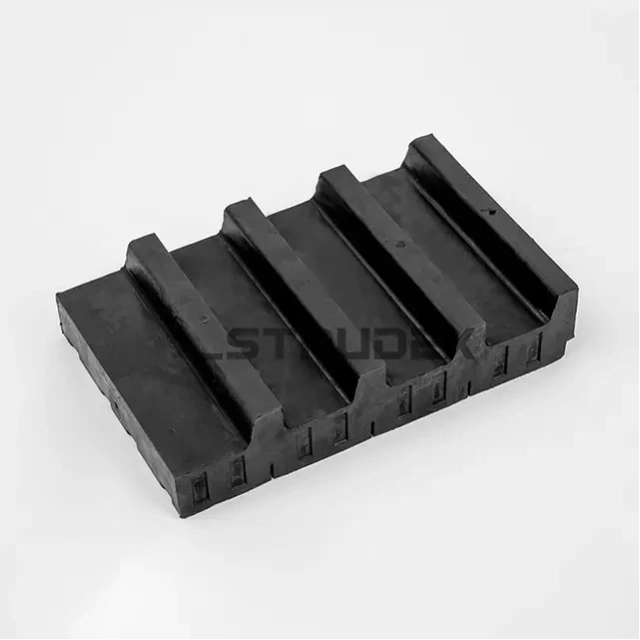
Relining a mill is one of the most time-consuming and high-risk maintenance tasks in mineral processing. Downtime is costly, and worker safety is paramount. This is why liner attachment systems are now undergoing a quiet revolution toward simplicity, modularity, and safety.
Traditional bolted systems are being replaced by modular liner assemblies that require fewer components and allow faster installation. Strudex has developed attachment systems designed for minimal handling—each liner module is lighter, ergonomically shaped, and compatible with quick-fit hardware. Fewer parts mean fewer potential failure points and shorter reline durations, ultimately improving mill availability.
Standardized modules also enable partial relines, where only the most worn sections are replaced. This flexible maintenance strategy helps operators plan service intervals more efficiently, reducing both cost and risk. Additionally, the modular approach supports easy adaptation between different mill sizes and designs, making inventory management simpler and global servicing more consistent.
Every improvement in attachment design contributes directly to worker welfare. With hand-safe installation, fewer lifting operations, and lower physical strain, Strudex’s systems reflect the industry’s broader shift toward safer, smarter relines. The goal is clear: maintain high mill availability without compromising the wellbeing of maintenance teams.
The rise of digitalization in mining has made predictive maintenance a game-changer for mill operations. Instead of waiting for visible wear or unplanned shutdowns, operators can now use sensors and analytics to anticipate liner performance in real time.
Embedded sensors can measure liner wear, temperature, vibration, and impact patterns, feeding data into monitoring systems that predict remaining service life. Combined with DEM models and historical data, these systems can recommend the optimal timing for relines—balancing maintenance schedules with production targets.
Strudex is actively exploring how to integrate such smart technologies with its rubber and composite liners. By coupling material science with data analytics, the company aims to help operators make decisions based on facts, not assumptions. The next generation of mill liners will not just endure—they will communicate. Real-time insights into wear and impact patterns will allow continuous optimization of milling parameters, improving both efficiency and liner longevity.
Predictive maintenance is no longer a luxury—it’s a competitive necessity. Through intelligent design and collaboration with digital technology partners, Strudex is helping lead the shift from reactive maintenance to predictive asset management in mineral processing.
Sustainability in mining isn’t limited to emissions and energy—it extends to every piece of equipment, including mill liners. Material selection, energy consumption, and workplace environment all play vital roles in shaping a responsible operation.
Rubber liners contribute to lower environmental impact by reducing noise levels and energy usage. Compared with steel liners, rubber’s elasticity dampens vibration and impact, resulting in significantly quieter operation—an important benefit for worker comfort and regulatory compliance. Furthermore, the lighter weight of rubber liners reduces energy consumption during mill startup, leading to measurable operational efficiency gains.
Composite liners also promote sustainability by extending wear life, which reduces material waste and replacement frequency. Longer lifecycles mean fewer liner sets produced, transported, and disposed of—lowering the overall carbon footprint of mill maintenance.
Strudex integrates environmental responsibility into every stage of product development. From selecting eco-friendly raw materials to optimizing production efficiency, the company ensures that its solutions align with the global drive toward greener mining practices. Sustainability is not an afterthought—it’s built into the future of mill liner design.
As a high-tech enterprise specializing in rubber wear-resistant products, Strudex has spent over two decades refining its engineering and production capabilities. The company’s modern facility is equipped with advanced CNC machining centers, rubber injection systems, and precision testing equipment—all focused on delivering performance-driven liner solutions.
Strudex invests heavily in material research, continuously improving rubber and composite compounds for higher impact resistance and wear life. Its design team utilizes DEM and FEM simulations to customize liner profiles for each client’s milling conditions, ensuring optimal throughput and extended service intervals. Moreover, the company’s modular attachment systems make relines faster and safer, further reducing downtime.
What truly sets Strudex apart is its commitment to innovation through collaboration. Working closely with mining partners, the company develops tailored solutions that address real-world challenges—from liner noise reduction to predictive wear monitoring. Every project is guided by one principle: innovation should deliver measurable value on the plant floor.
For customers seeking proven performance combined with forward-thinking design, Strudex represents a trusted partner in the evolution of mill lining technology.
The evolution of mill liners tells a broader story about the modernization of mining itself. Materials are becoming smarter, designs are powered by simulation, and maintenance is guided by data. As the industry moves toward higher efficiency and sustainability, mill liner innovation will remain a central driver of progress. Strudex continues to pioneer this future—developing next-generation rubber and composite liners that improve safety, performance, and reliability. To explore how our advanced liner solutions can enhance your operation, get in touch with our technical team today. Contact us to discuss your mill’s needs and discover how Strudex can help you achieve the next level of grinding efficiency with our liner systems.
1. What makes modern mill liners different from traditional designs?
Modern liners are engineered for performance, not just protection. Using advanced rubbers and composites, they reduce weight, improve energy efficiency, and extend wear life compared to conventional steel liners.
2. How do DEM and FEM simulations improve liner performance?
DEM and FEM allow engineers to model grinding dynamics and structural stresses before manufacturing, ensuring that each liner design delivers optimal throughput and wear balance.
3. Why are rubber and composite liners considered more sustainable?
They are lighter, quieter, and longer-lasting, which means less energy use, lower noise pollution, and fewer liner replacements—reducing the environmental footprint of milling operations.
4. What innovations is Strudex developing for the future?
Strudex is advancing material science, simulation-based design, and predictive maintenance technology to create intelligent liner systems that combine safety, durability, and data-driven performance.


